All Departments
- Advanced Gait Evaluation & Management
- Ankylosing Spondylitis
- Cluster Headache
- Corticobasal Degeneration (CBD)
- Diagnostic Evaluation
- Disc Prolapse
- Dystonia
- Electrocardiogram (ECG)
- Electromyography (EMG)
- Epilepsy
- Guillain-Barré Syndrome (GBS)
- Headache & Pain Management
- Low Back Pain
- Low Back Pain
- Migraine
- Nerve Conduction Velocity (NCV)
- Neurological Disorder
- Other Chronic Headache Conditions
- Other Neurological Disorders
- Parkinson’s Disease
- Peripheral Neuropathy
- Personalized physiotherapy and mobility programs
- Potts Spine / Bone & Spine Tuberculosis
- Progressive Supranuclear Palsy (PSP)
- Radiculopathy
- Rehabilitation in various walking and movement disorders
- Rehabilitation Services
- Sacroiliitis
- Spasticity
- Specialized Treatments
- Spine & Musculoskeletal Disorders
- Tension-Type Headache
- Video EEG

Emergency Cases
+91 9839544407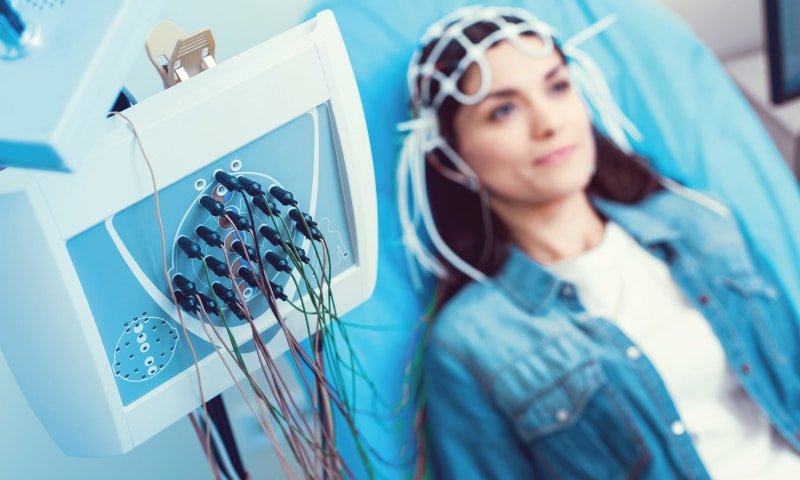
Video EEG
Video Electroencephalography (Video EEG) Monitoring is an advanced diagnostic procedure used to record and analyze brain activity along with synchronized video footage of a patient’s behavior and movements. It is primarily used to diagnose epilepsy and other seizure-related disorders, but it can also help identify non-epileptic events such as fainting, sleep disorders, or movement abnormalities.
At our center, we offer state-of-the-art Video EEG monitoring in a comfortable, fully supervised environment. This test allows our specialists to capture brain activity during episodes, providing crucial information for accurate diagnosis and effective treatment planning.
Purpose of Video EEG Monitoring
Video EEG helps in understanding the nature, frequency, and origin of abnormal brain activity, and in differentiating between various types of seizures and other neurological conditions. It is particularly valuable for:
Confirming or ruling out epilepsy
Classifying seizure types for targeted treatment
Localizing seizure focus before epilepsy surgery
Assessing treatment response in patients with uncontrolled seizures
Differentiating between epileptic and non-epileptic events (such as psychogenic spells, sleep disorders, or movement abnormalities)
How the Procedure Works
EEG Setup:
Small electrodes are attached to the scalp to record brain electrical activity.Continuous Video Recording:
A synchronized video camera records physical movements, behavior, and body responses.Simultaneous Monitoring:
The EEG and video are recorded continuously, allowing correlation of brain activity with clinical events.Duration:
Depending on the case, monitoring may last a few hours (short-term) or 24–72 hours (long-term) to capture relevant events.Supervised Environment:
Patients are monitored by trained technicians and neurologists in a controlled setting to ensure safety throughout the procedure.
Who Needs Video EEG Monitoring
Video EEG is recommended for patients who:
Have unexplained or recurrent episodes of loss of consciousness, jerking, or staring spells
Are being evaluated for epilepsy diagnosis or surgical candidacy
Do not respond adequately to anti-seizure medications
Require clarification between epileptic and non-epileptic seizures
Need precise seizure localization for targeted therapy
Benefits of Video EEG Monitoring
Provides accurate diagnosis and avoids misclassification of seizure disorders
Helps optimize or adjust anti-epileptic medication regimens
Enables personalized treatment planning and surgical evaluation
Improves understanding of patient-specific seizure patterns
Avoids unnecessary medication in non-epileptic cases
Safety and Comfort
Video EEG monitoring is safe and non-invasive.
No electrical current is passed through the body.
All recordings are performed under medical supervision.
Emergency medical care is readily available during the test if a seizure occurs.
The setup is designed to ensure patient comfort while maintaining clinical accuracy.
Our Video EEG Facilities
Advanced EEG recording systems with high-resolution video synchronization
Continuous monitoring by trained EEG technologists and neurologists
Dedicated epilepsy monitoring units (EMU) for long-term observation
Comprehensive interpretation by experienced epileptologists and neurophysiologists
Integration with MRI and neuroimaging for surgical or diagnostic planning
Goals of Video EEG Monitoring
Our objectives are to:
Accurately diagnose seizure and non-seizure disorders
Identify seizure focus and type for precise treatment
Improve medication management and control
Evaluate surgical options for drug-resistant epilepsy
Enhance patient safety and quality of life